Fit is a relationship, not a dimension
Overall width or weight can help describe a controller, but neither explains whether a player can reach a shoulder control without shifting grip, whether the thumb rests comfortably, or whether the shell edge presses into a particular part of the hand. Two people with similar hand measurements may hold a controller differently. Preferred posture, mobility, play style and prior experience also matter. Ergonomic comparisons should describe these factors instead of declaring one form universally comfortable.
Start by naming the task. A controller used for short menu navigation presents different demands from a long action-game session with frequent trigger use. Ask which controls are used, how often the grip changes, and what posture is maintained. If possible, include more than one task and more than one participant, while keeping their observations separate rather than blending them into a single average.
- Reach
- Whether a control is accessible without an unintended change in hand position or excessive stretch.
- Pressure
- Where contact force is felt, and whether it changes as the grip is maintained.
- Posture
- The hand and wrist position adopted during the stated task and session.
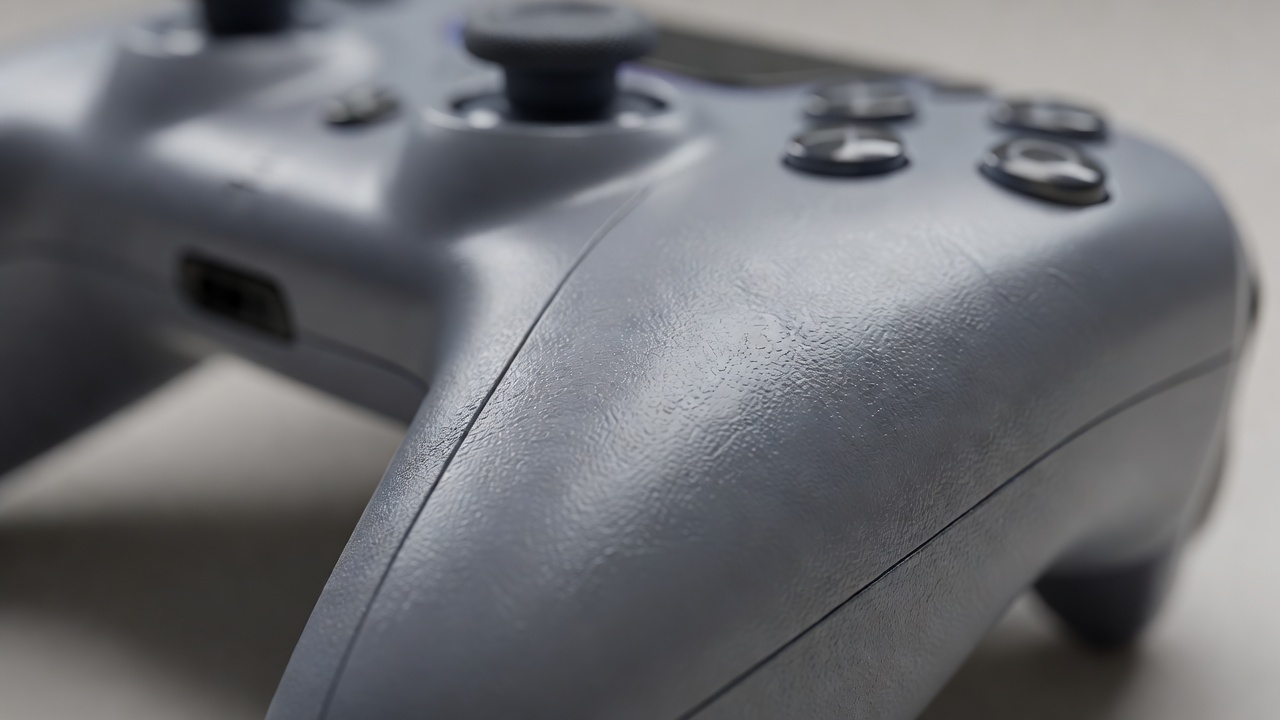
- Texture
- The surface experience, including perceived traction and irritation over time.
Look beyond first impressions
A brief hold can reveal obvious reach or balance issues, but comfort may change with repetition. Grip pressure can rise when a player is concentrating, and a surface that feels secure initially may feel abrasive after sustained contact. Conversely, unfamiliar geometry may feel awkward at first and become natural after a practice period. Record when the observation was made and whether the participant had prior experience with the shape.
Ask participants to describe a specific location and sensation instead of choosing only a general comfort score. “The right trigger requires a small grip shift after several minutes” is actionable. “Not ergonomic” is difficult to interpret. A rating scale can still be useful if its anchors are defined and the underlying notes are retained. Treat a score as a summary of one person’s response under one task, not as a portable property of the hardware.
Testing methodology: a structured fit session
| Stage | Procedure | Notes to preserve |
|---|---|---|
| 1 · Describe | Record participant context, task, posture and prior familiarity. | Hand size method if used, handedness and task duration. |
| 2 · Explore | Use a consistent sequence of controls and grip positions. | Reach, grip changes, pressure points and contact locations. |
| 3 · Repeat | Return to the task after a rest; compare early and later observations. | Time to discomfort, adaptation and any change in response. |
| 4 · Compare | Use the same task and comparable session conditions on another shape. | Order, breaks, participant comments and uncertainty. |
For a more formal assessment, establish a consistent sequence, a quiet setting and planned rest intervals. Avoid asking leading questions such as “Is this grip uncomfortable?” Instead ask where the hand contacts the device, whether any movement feels constrained, and how the sensation changes over the session. Let participants pause or stop. A discomfort report is useful information, not a performance failure.
Cause and confounder
A sore thumb after a session is an observation, not automatically evidence of a controller defect. Task intensity, grip force, posture, previous activity and individual sensitivity may contribute. To explore a suspected relationship, vary one condition at a time where practical and document the sequence. Do not make medical claims or infer an injury from a brief usability session. Ergonomic notes describe experience in context; they do not replace professional assessment.
Surface temperature, sweaty hands, room conditions and protective accessories may affect tactile impressions. Weight distribution may feel different depending on how the device is held. If the controller is evaluated with a cable attached, note whether cable position alters the grip. When participants know a product’s price or reputation, expectations can influence ratings; blind or randomized comparison order can reduce some expectation effects, although it cannot eliminate every bias.
Why one comfort score is not enough
Aggregating responses can obscure a meaningful minority experience. Report the number of participants, task, session duration and range of views. If a group average is presented, preserve individual variation and explain the scale. Include accessibility considerations when relevant, but do not assume a single body dimension predicts reach or ease for every user. A measured dimension describes geometry; lived fit includes interaction, adaptation and personal preference.
Good ergonomic evidence makes room for variation. State who used the controller, for what task, for how long, and what changed during the session.
Our approach therefore treats fit as a set of observations rather than a universal ranking. A useful report can be both specific and modest: it tells another person what happened, under which conditions, and where the result may not apply. That is more valuable than a score presented without its human context.
Read questions from the bench →